How It All Began!
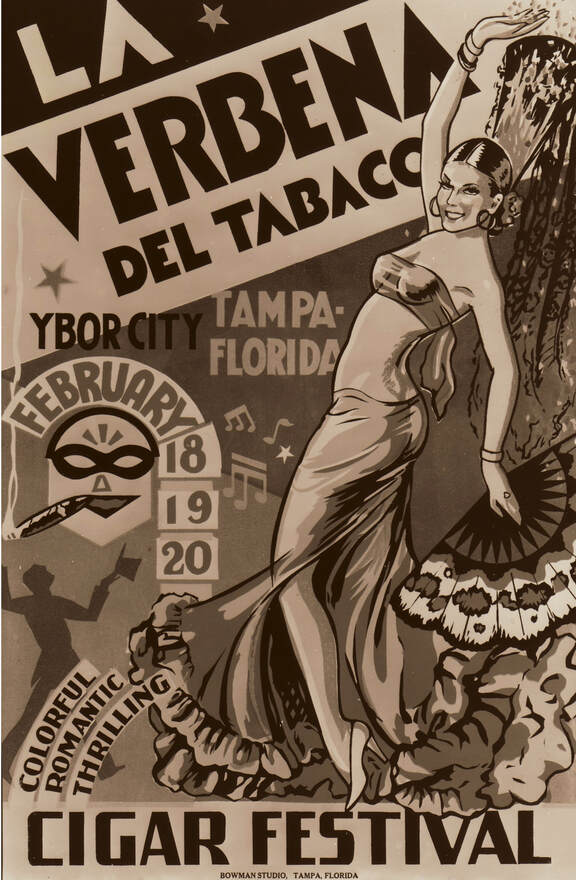
Poster advertising the 1920 Cigar Festival.
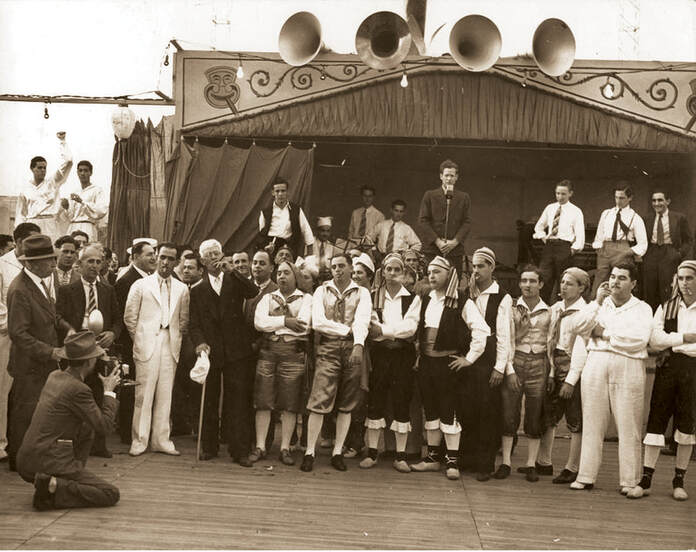
By 1939, Tampa’s cigar industry was clearly in trouble. Between 1929 and 1939, 17 factories closed, and Tampa’s cigar manufacturers employed about 5,000 fewer people than they had done ten years earlier. A 1939 Tampa Times article cited “less than 20 plants which could be called ‘major.’” But in 1935, none of that mattered. In 1935, what mattered was the Cigar Industry Golden Jubilee. Over four days, the citizens of Tampa were invited to revere the industry that made the town famous.
The Tampa Times observed that perhaps Tampanians were “too close” to appreciate the impact cigars had on Tampa, a sentiment that might be as true today as it was in 1935. However, the event underscored the industry’s historic influence and garnered international media attention while attracting huge local crowds and distinguished visitors.
The Tampa Times observed that perhaps Tampanians were “too close” to appreciate the impact cigars had on Tampa, a sentiment that might be as true today as it was in 1935. However, the event underscored the industry’s historic influence and garnered international media attention while attracting huge local crowds and distinguished visitors.
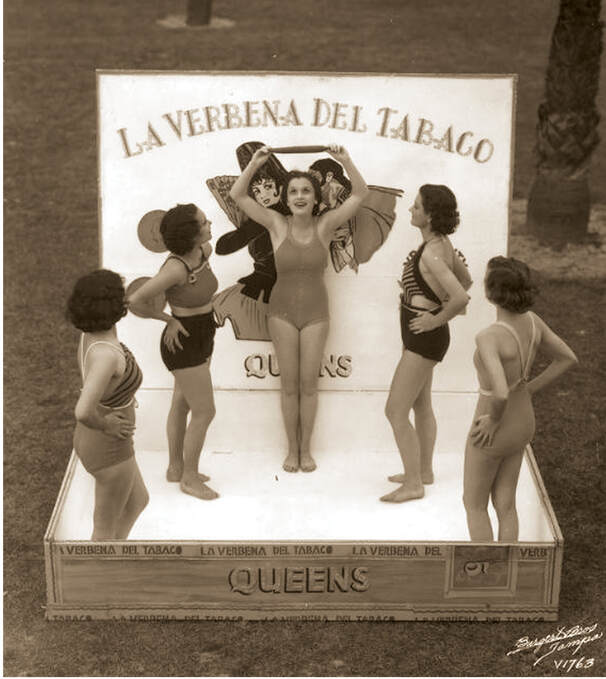
Women in swimsuits are in a large cigar box for the La Verbena del Tabaco Festival. The woman holding the cigar is Rose Esperante Figueredo, the grandmother of Lisa Figueredo, owner and publisher of Cigar City Magazine.
Beginning with the Verbena celebration, the four-day event included:
The opening night verbena–a Spanish-style carnival–was held at Plant Park and featured traditional folk performances from the Italian, Cuban, Spanish, and German social clubs participating. The Verbena Festival included a public wedding (the bride wore a dress made entirely of cigar leaves) and a German beer garden. Each Tampa’s ethnic mutual aid societies maintained its pavilion, where scheduled performances occurred every 30 minutes.
- A cigar-making contest.
- Rolling a world-record-setting cigar, a cigar factory open house where community members were invited to tour local factories.
- A daytime parade that drew over 16,000 people.
The opening night verbena–a Spanish-style carnival–was held at Plant Park and featured traditional folk performances from the Italian, Cuban, Spanish, and German social clubs participating. The Verbena Festival included a public wedding (the bride wore a dress made entirely of cigar leaves) and a German beer garden. Each Tampa’s ethnic mutual aid societies maintained its pavilion, where scheduled performances occurred every 30 minutes.
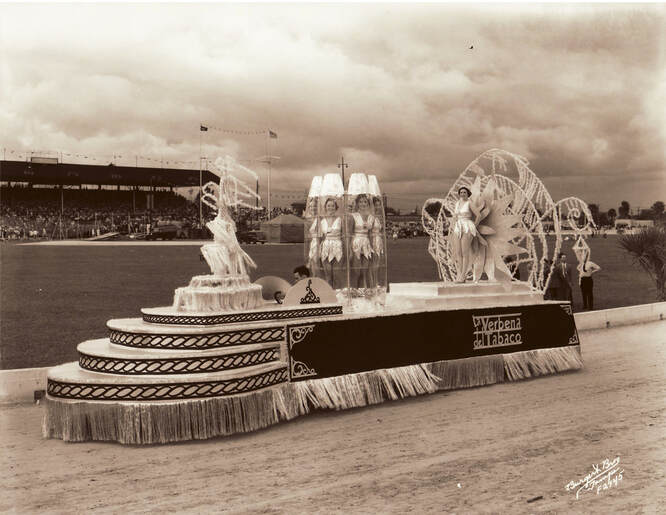
The La Verbena Del Tobacco float at Plant Field, 1940, complete with ladies encased in oversized cigar tubes.
As much a celebration of the cigar industry’s 50th birthday, the Golden Jubilee was also a public relations spectacle, the last gasp of a dying era. By 1949, cigar factories employed about 7,000 cigar workers, and the number of large factories had shrunk to 18. By the 1950s, the industry was almost entirely mechanized, with less than 2,500 workers still making hand-rolled cigars.
Verbenas continued until about 1940, while other “Latin Fiestas” and events continued through the 1960s. Today, events like the Ybor City Cigar Festival in December continue to celebrate cigars and Tampa’s Latin influence. The photos shown on the following pages highlight the spirit of the original cigar industry celebration.
Verbenas continued until about 1940, while other “Latin Fiestas” and events continued through the 1960s. Today, events like the Ybor City Cigar Festival in December continue to celebrate cigars and Tampa’s Latin influence. The photos shown on the following pages highlight the spirit of the original cigar industry celebration.
From 1996 to 2013, the Ybor City Cigar Festival passed through a few hands. It became evident that these organizations needed more staff to continue with such a huge event. This is where Cigar City Magazine's founder and publisher, Lisa Figueredo, stepped in with her event-making expertise! It's no secret the magazine is known for providing some of the best events in Tampa, like the Tampa Mafia Tours, Cigars & Stars, and Bada Bing: A Killer Event, just to name a few. So back in 2015, they decided to step in to save this much-wanted cigar festival. The event was a success, but they needed to add more things to make it bigger and better. In 2016, they did just that!
In 2016, they knocked it out of the park with nearly 10,000 people in attendance, making it the largest cigar festival in the world! With the leading cigar industry families, Arturo Fuente Cigar Company and J.C. Newman Cigar Company, as presenting sponsors, helped drive in cigar aficionados, Ybor supporters, local families, history enthusiasts, and out-of-town visitors worldwide! The cigar festival carried the "BEST" cigars from around the world, and cigar lovers could find the most famous and the rarest cigars and some "Boutique" cigars they had never experienced!
Since 2016, the Ybor City Cigar Festival has brought close to 100,000 people to Ybor City, not to mention the millions of dollars it has brought to the business in Tampa.
This year's 2024 Ybor City Cigar Festival continues in Centennial Park on Sunday, December 8, 2024.
In 2016, they knocked it out of the park with nearly 10,000 people in attendance, making it the largest cigar festival in the world! With the leading cigar industry families, Arturo Fuente Cigar Company and J.C. Newman Cigar Company, as presenting sponsors, helped drive in cigar aficionados, Ybor supporters, local families, history enthusiasts, and out-of-town visitors worldwide! The cigar festival carried the "BEST" cigars from around the world, and cigar lovers could find the most famous and the rarest cigars and some "Boutique" cigars they had never experienced!
Since 2016, the Ybor City Cigar Festival has brought close to 100,000 people to Ybor City, not to mention the millions of dollars it has brought to the business in Tampa.
This year's 2024 Ybor City Cigar Festival continues in Centennial Park on Sunday, December 8, 2024.
Ybor City Cigar Festival Proclamations
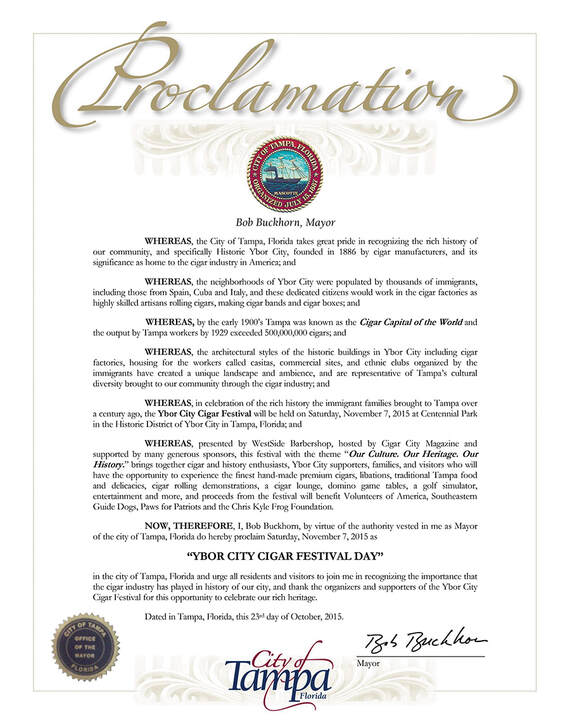
2015 Ybor City Cigar Festival Day honors the Cigar Capital of the World!
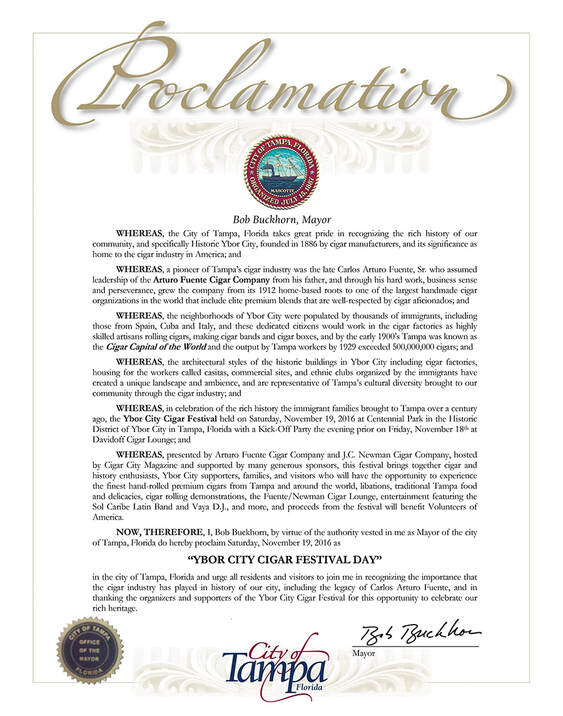
2016 Ybor City Cigar Festival Day honors Don Carlos Fuente.